europenews.sbs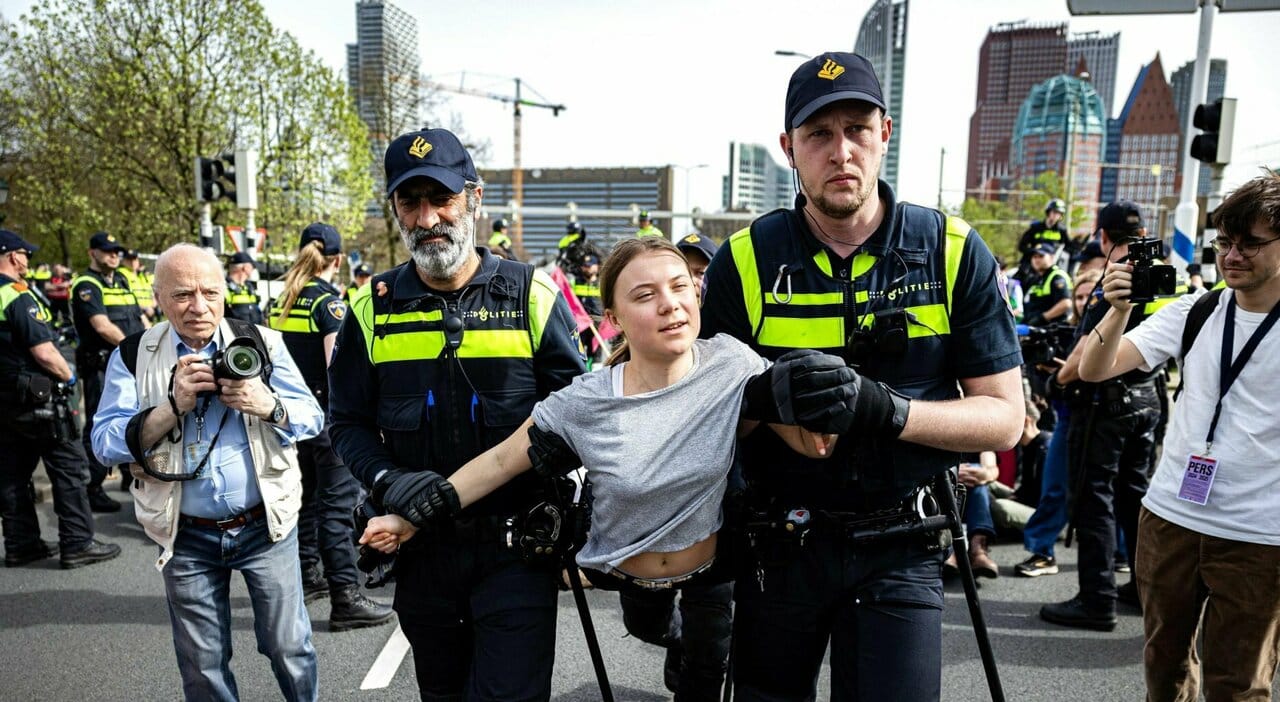
Overview of the Incident
On December 23, 2025, climate activist Greta Thunberg was arrested during a pro-Palestinian protest held in London. The demonstration took place in the vicinity of the British Parliament, a significant location known for hosting various protests advocating for social and political issues. Thunberg, who has gained international recognition for her environmental advocacy, joined this protest to express solidarity with the Palestinian cause, highlighting the intersection between climate justice and global human rights.
The event commenced at around 2 PM, drawing a diverse crowd that included activists from various organizations, members of the public, and media personnel. Thunberg’s involvement was notable, as it brought increased visibility to the protest while also underscoring the urgent need for action on multiple fronts, not just climate-related issues. Attendees chanted slogans and carried banners advocating for Palestinian rights, and Thunberg was seen addressing the crowd, emphasizing the importance of unity in fighting for justice.
The situation escalated when law enforcement intervened, leading to Thunberg’s arrest. Reports indicate that police officers were present to maintain order, but tensions arose as demonstrators remained steadfast in their commitment to the cause. As officers approached Thunberg to enforce an arrest, the crowd’s reaction was mixed; while many expressed support for her actions, others voiced their discontent with the police response. The activists maintained their stance, which reflected a broader discontent with governmental policies affecting both the environment and human rights.
Thunberg’s presence at the pro-Palestinian protest is significant, as it connects environmental advocacy with various global movements, illustrating the complexity of social justice. Both attendees and law enforcement reacted strongly, emphasizing the contentious nature of the issues at hand. The incident not only drew attention to the climate crisis but also posed critical questions regarding activism and governmental responses to peaceful protests.
Background on Greta Thunberg and Her Activism
Greta Thunberg, born on January 3, 2003, in Stockholm, Sweden, is globally recognized for her unwavering commitment to climate advocacy. She first gained international attention in 2018 when, at the age of 15, she initiated the “Fridays for Future” movement by striking from school to protest outside the Swedish parliament. Thunberg’s solitary protest quickly resonated with young people worldwide, leading to mass mobilizations demanding action against climate change.
As a prominent climate activist, Greta has delivered powerful speeches at various high-profile platforms, including the United Nations Climate Change Conference (COP) and the World Economic Forum in Davos. During these engagements, she has consistently called out world leaders for their inaction on climate issues, often emphasizing the urgency of the crisis and the imperative for immediate evidence-based measures. Her passionate advocacy has earned her numerous accolades, including nominations for the Nobel Peace Prize.
Beyond climate activism, Thunberg has also expressed her concern for interconnected social justice issues, including the plight of refugees and indigenous rights. This broader awareness informs her participation in various protests and movements, which, as seen in her attendance at the pro-Palestinian protest in London on December 23, 2025, underscores her commitment to advocating for marginalized communities affected by societal injustices. By aligning her climate activism with those fighting for human rights, Greta demonstrates that the struggles for environmental and social justice are inherently linked, reinforcing her overarching ethos of activism that champions equality and sustainability for all.
Reactions from the Public and Officials
The recent arrest of environmental activist Greta Thunberg during a pro-Palestinian protest in London has elicited a diverse array of reactions from the public, political figures, and fellow activists. Many within the environmental movement expressed solidarity with Thunberg, viewing her detention as a continuation of her commitment to activism. Commentators from various organizations have praised her unwavering stance on social justice issues, noting that her actions resonate with a broader fight against injustice.
Prominent activists took to social media platforms to express their support, invoking messages of unity and emphasizing the importance of standing up for marginalized communities. Leaders of environmental organizations highlighted Thunberg’s courage in drawing attention to the intersectionality of environmental and humanitarian issues, reinforcing the idea that activism often transcends a single cause.
On the other hand, there has been criticism from certain quarters. Some political figures and commentators have questioned the effectiveness of protests, arguing that such actions may alienate potential supporters. Critics assert that while Thunberg’s intent may be noble, her involvement in a protest perceived as politically charged could detract from the climate crisis narrative she has championed for years. This contention reflects a tension within activist circles, often debating the best approach to advocacy.
The reaction from law enforcement has also come under scrutiny. Authorities defended their actions by referencing public safety and the need to maintain order during what they deemed an unauthorized protest. However, this justification raised concerns among human rights advocates, who argue that the arrest of activists raises significant questions regarding freedom of expression and the right to protest. As the fallout continues, the discourse surrounding Thunberg’s arrest reveals the complexities and differing viewpoints on activism and civil disobedience in contemporary society.
Implications for Climate Activism and Future Protests
The recent arrest of climate activist Greta Thunberg during a pro-Palestinian protest in London raises pertinent questions about the intersection of climate activism and broader social justice movements. Thunberg, a prominent figure in the fight against climate change, has garnered global attention for her unwavering commitment to environmental causes. Her involvement in protests advocating for humanitarian issues signifies a potential expansion of the climate movement’s focus. This incident may prompt activists to reconsider their strategies and areas of advocacy.
On one hand, the arrest of such a high-profile activist could deter individuals from participating in future protests, particularly if they fear similar consequences. Potential legal repercussions might discourage grassroots movements aiming to address not just climate change but also various social justice issues. However, there exists a contrasting viewpoint that suggests such incidents can energize the activist community. The backlash against the arrest of Thunberg may galvanize supporters, leading to increased participation in protests across the UK and internationally. Activism often thrives on moments of adversity, harnessing public outrage to drive momentum.
Furthermore, public perceptions of activism may evolve as a result of this incident. Society’s response to government enforcement against activists can shape how individuals perceive the legitimacy of these movements. If public sentiment leans towards supporting Thunberg and the causes she represents, it could lead to a shift in how governments navigate law and order in the context of protests. We may witness enhanced collaboration between various movements, linking climate change issues with social justice advocacy, which could result in a more unified and powerful voice for change.
Ultimately, the ramifications of Greta Thunberg’s arrest extend beyond her individual case, influencing the trajectory of activism moving forward. The response from both the public and governmental entities will be pivotal in shaping future demonstrations related to climate and humanitarian causes.
If you appreciate our hard work in telling the truth through Europe News, please consider becoming a regular donor.