 europenews.sbs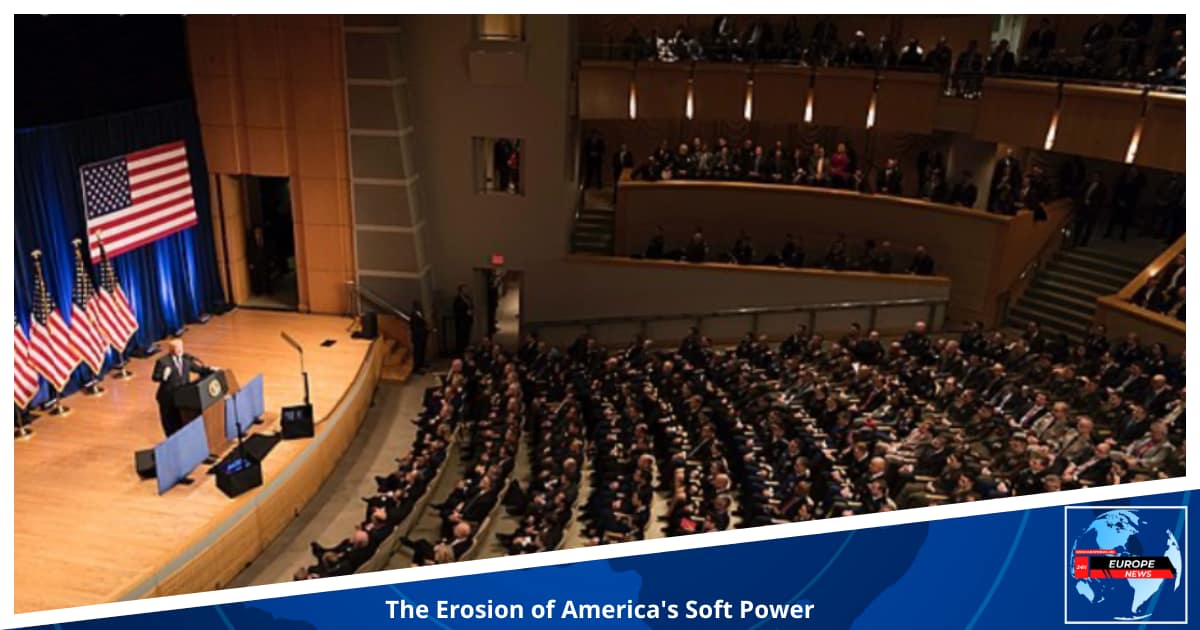
America’s Soft Power
It allows nations to shape their global standing and pursue their interests without resorting to aggression.
By prioritizing dialogue, negotiation, and collaboration, the U.S. has managed to secure strategic advantages and promote its ideology internationally. By building relationships rooted in mutual interests and objectives, the U.S. enhances its credibility and reputation on the world stage.
Current Trends Indicating Erosion of U.S. Soft Power
In recent years, various trends have surfaced that indicate a marked erosion of America’s soft power on the global stage. One notable indicator is the shifting global public opinion toward the United States. These movements challenge the narrative that American soft power is unrivaled.
Scenes of discord and debate within the U.S. can detract from the credibility of American values abroad. International observers may question how a nation grappling with significant internal challenges can effectively lead on the world stage. Collectively, these elements illustrate a complex web of factors contributing to the current erosion of U.S. soft power.
Challenges Contributing to the Decline of Soft Power
This has led to a disconnect between America’s intentions and perceptions in the global arena.
Such events often generate backlash against perceived American imperialism, contributing to antipathy towards U.S. influence worldwide.
The Future of U.S. Soft Power: Opportunities for Renewal
A pivotal opportunity lies in enhancing cultural diplomacy. Such initiatives create lasting connections that can counteract negative perceptions and foster mutual respect.
By engaging with emerging economies and regional powers, the U.S. can cultivate partnerships that amplify shared interests.
Engaging non-governmental organizations, community groups, and influential citizens is essential for restoring trust and influence.
If you appreciate our hard work in telling the truth through Europe News, please consider becoming a regular donor.